
Immigration
A Family's Story Part 1 Mom

My father’s friend Jose Holowaty, a Mexican Ukrainian, once likened immigration like a Rubik’s cube but an easy one to solve. Give the new arrivals some time, some support, a family around him or her, and they can make a new home.
Immigrants are to be commended for their bravery. Imagine leaving everything you knew behind. Everything. The smells of the markets, the foods, where the druggist is located. Your favorite restaurant, the sounds of your own mother tongue. Architecture that is familiar. The best direct route to your doctor. At rush hour.
To me, immigrants are to be celebrated and supported, not reviled and hunted by men with masks and guns.
This is the story of my family’s emigration to Canada. Some of you will find events that resonate with your own family history.
Many of the anecdotes in this essay may not seem to be about immigration at all. Fair comment. But if you read them through the lens of new Canadians and how their culture and values might intersect with those of the old country, it might give you an idea of why they’re included.
MOM
Her family name was Lewak, a common name in Poland, and to a lesser extent Ukraine, where her family came from. Except that they came from Galicia, the western most part of Ukraine. The red oval below indicates the region of Galicia, laid against a current-ish map of Eastern Europe.
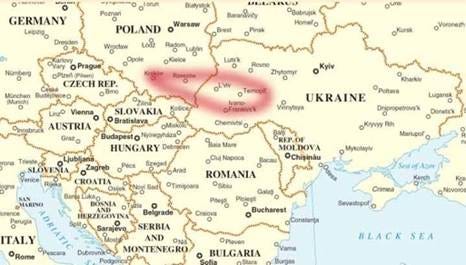
When Mom’s parents came to Canada, the Ukrainian part of Galicia was under the Austro- Hungarian empire, which created some issues in the minds of the immigration officials. Not sure where they landed. Could have been Halifax, St. John’s or even Quebec City.
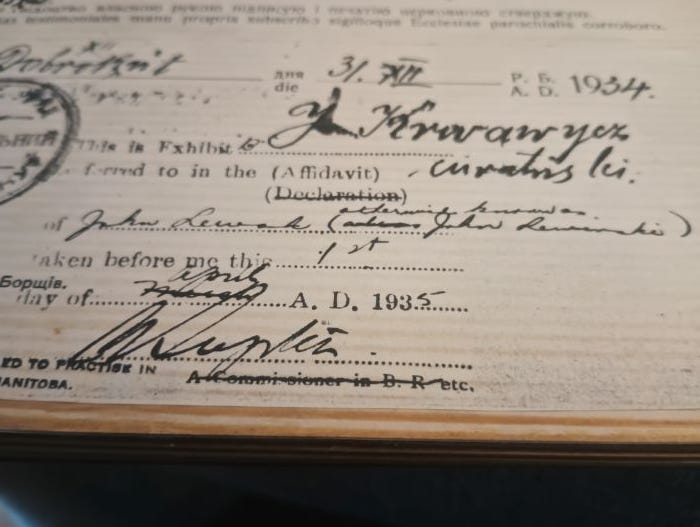
They came to Canada in 1911. Fortunately, the War Measures Act of 1914 wasn’t enacted yet, and so they weren’t considered enemy aliens. The worst thing that happened to them was the immigration officer told them their name Lewak didn’t sound sufficiently Ukrainian and unilaterally gave him the name of Lewinski.
According to my mother, it took years to get up the courage to tell the Canadian government they had his name wrong. Living in an authoritarian regime will do that to you.
A section of my grandfather’s baptismal certificate showing the names Lewak and (aka) Lewinski.
It wasn’t easy getting established in a new country and new city, a new language and a new set of cultural values. People made sacrifices. This picture below was indicative of what our family experienced in the new country and the accommodation available to them:
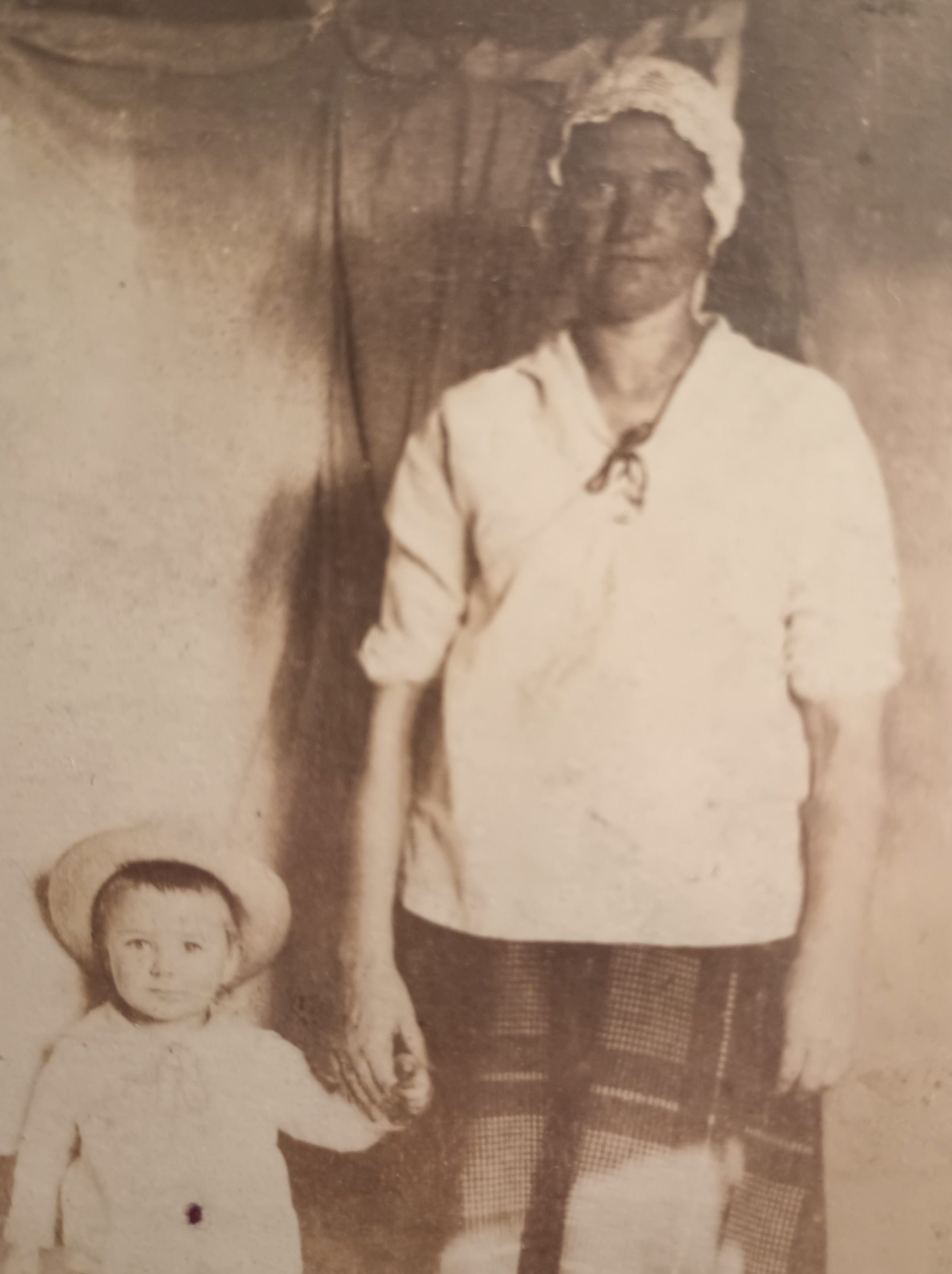
A sheet would cover the sleeping area from the living area and makeshift kitchen. No indoor plumbing.
Grandpa Ivan, or John as he called himself, was a stoic man, with little English and little visible emotion. But when family came together at their house, and I was at the end of table, where the little kids were seated, he would make a speech in Ukrainian[1] and sob. My mother said his speeches were always about the same themes…family, freedom, and gratitude.
At Christmas time or New Years Eve, he would flick a spoonful of kutia, a dish made of buckwheat, poppy seeds and honey, up to the ceiling and see how many grains of would stick. The higher the number, the more prosperous the family would be in the coming year.
That poppy seeds were used had some law enforcement implications. My grandmother would grow poppies in their very large backyard garden. It is essential in Ukrainian cooking. It is also essential in the making of opium. So, each summer the RCMP would arrive and rip up the poppy seeds. What did my grandmother know from opium? It was my father’s side that knew about substances that were common back home, but not in Canada.
Part 2 to follow
Andrew, the first time I was in Ukraine for clinical drug trials, I remember looking around whilst walking in the crowds in Kyiv, Odessa, and elsewhere and "recognizing" faces that could have been relatives. It was the first time that Ukraine as a family point of origin was driven home. I'll NEVER forget it. Please keep those stories and photos coming, Gary
This is wonderful. I love it. Keep writing.